How to Save Money When Booking a Bar With Private Room
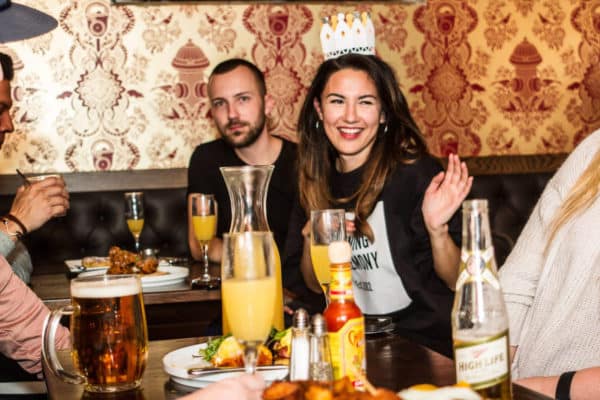
Booking a Bar With Private Room can feel like a smart upgrade until the quote lands in your inbox and the numbers start creeping upward. The room fee looks manageable at first. Then come the beverage minimum, service charge, optional AV package, cake plating fee, security deposit, overtime rate, and the kind of menu pricing that turns a casual gathering into a budget problem.
The good news is that private room bookings are often more negotiable than people expect. Bars structure these deals in different ways, and once you understand how venues make money, you can usually trim https://maps.app.goo.gl/4GnHat7jvfaKZjtm8 costs without making the event feel cheap. I have seen hosts save hundreds simply by shifting the start time, narrowing the drink package, or asking one better question during the first call.
What matters most is not finding the absolute cheapest room in town. It is finding the best overall value for your guest count, your style of event, and your real spending habits. A room that is free but comes with a steep minimum can cost far more than a room with a modest rental fee and flexible bar terms. Saving money starts with seeing the full picture.
Know what you are actually being charged for
Private room pricing at bars tends to fall into a few common models. Some venues charge a flat room rental fee. Others waive the fee if you meet a food and beverage minimum. Some do both, especially on weekends or during peak hours. What looks like a bargain in one line item may be made up elsewhere.
This is where many people overspend. They compare one number instead of the full package. A bar might advertise a private room for $250, which sounds excellent, but require a $2,000 minimum spend and add a 24 percent service charge plus tax. Another venue may ask for a $600 room fee with no minimum and more reasonable drink prices. Depending on your guest list, the second option can come out lower.
Ask for a full estimated total based on your likely attendance, not just the base rate. If you expect 30 guests and most of them are light drinkers, say so. If your event is a birthday with a short speech and a simple tab, mention that too. A good events manager can usually sketch a realistic spend range, and that range is more useful than the headline price.
It also helps to separate mandatory charges from optional ones. Some bars include staffing, basic furniture, and standard sound in the quote. Others list them separately. I once reviewed a quote that looked competitive until the host realized chairs, a bartender, and a microphone were all extra. By the time everything necessary was added back in, it was one of the most expensive options.
Timing has a bigger impact than most hosts realize
If you want to save money, start with the calendar. Bars price private rooms according to demand, and demand changes dramatically by day and time. Friday evenings and Saturday nights usually command the highest rates because the venue is giving up space it could fill easily with regular customers. A Tuesday evening, Thursday happy hour, or Sunday afternoon often costs far less.
Even moving your booking by two hours can make a difference. A 5:30 p.m. To 7:30 p.m. Gathering may carry a lower minimum than a 7:00 p.m. To 10:00 p.m. Booking because it finishes before the room enters peak traffic. If your event does not need late-night energy, an earlier slot can preserve the same atmosphere while lowering the bill.
Season matters too. December is expensive in many cities because of holiday parties. Big sports weekends, graduation periods, local festivals, and conference dates can all inflate pricing. If your schedule is flexible, ask the venue which dates are considered off-peak. Event managers usually know exactly where they can sharpen a pencil.
Here are the timing levers most likely to reduce your cost:
- Book Sunday through Thursday rather than Friday or Saturday.
- Choose a daytime or early evening slot instead of prime nightlife hours.
- Avoid major local event dates and holiday party season.
- Shorten the booking window if you do not need the room all night.
- Ask about shoulder times, when one hour earlier or later changes the minimum.
That last point deserves attention. Venues often think in blocks, not in minute-by-minute use. If your event crosses into a peak block, the price jumps. A room booked from 6:00 p.m. To 8:00 p.m. May be significantly cheaper than one booked from 7:00 p.m. To 9:00 p.m., even though both are two hours long.
Be honest about your guest count, but do not overestimate
Hosts frequently overbook space out of caution. They invite 50, expect 35, and reserve for 50 just in case. In a restaurant or bar setting, that can be a costly mistake. A larger private room usually comes with a higher minimum, and some venues staff according to the quoted count. If only 30 people show up, you still pay for the commitment attached to the larger reservation.
A tighter estimate saves money. If your event is for coworkers, close friends, or clients with a known attendance pattern, use the most realistic number you can defend. Ask the venue when final guest count is due and whether the minimum changes if attendance lands lower than expected. Some bars will let you shift into a smaller room or setup if the RSVPs come in soft enough and you give notice.
There is a balance here. Underestimating can create a cramped, uncomfortable room and trigger last-minute charges if the venue needs more staff or furniture. The goal is not to game the count. It is to avoid paying for unused capacity.
One practical trick is to frame the count as a range early, then firm it up later. Saying “we expect 28 to 35 guests, likely around 30” gives the events team a more realistic planning window than a hopeful “maybe 45.” In my experience, venues appreciate that kind of clarity and are often more accommodating when they trust the host.
Rethink the open bar before you agree to it
The fastest way to blow your budget in a Bar With Private Room is to default to a full open bar without asking how your group actually drinks. It sounds generous, but in many cases it is unnecessary. Plenty of events work just as well with a capped tab, a limited drink menu, or a hosted first round followed by cash bar.
Open bars also vary more than people realize. One venue’s “premium” package may include top-shelf liquor you do not need. Another may count sparkling wine or espresso martinis as upgrades. If your group mainly drinks beer, wine, and a couple of standard cocktails, paying for a broad premium package rarely adds value.
A capped tab is often the most efficient compromise. You decide in advance that the host covers, for example, the first $800 or $1,200 of drinks, then guests pay individually after that threshold. It gives the room a hosted feel without committing you to unlimited spending.
Another useful approach is to limit the menu rather than the quantity. Offer house wine, draft beer, and two simple cocktails. Guests are usually happy, service runs faster, and you avoid the cost and delay of labor-heavy custom orders. The same logic works for food. A few well-chosen shared plates often satisfy better than an oversized package with too much variety and too much waste.
Minimum spend can work in your favor if you use it strategically
People often hear “minimum spend” and assume it is a penalty. Sometimes it is. But if you were going to buy drinks and food anyway, meeting the minimum can be a better deal than paying a room fee on top of regular consumption.
The key is to understand what counts toward the minimum. At some venues, only food and drink apply. At others, service charge, tax, AV, or room rental do not count. That distinction matters. A $1,500 minimum is very different if your pre-tax food and beverage total must hit the full amount versus a version where several charges help you get there.
Once you know what counts, plan to spend intelligently. If you are close to the minimum, it may be better to add a late snack tray, upgrade a wine selection modestly, or offer a welcome cocktail than to fall short and pay the difference with nothing to show for it. I have seen hosts miss a minimum by $150, then get billed that shortfall anyway. At that point, they would have been better off ordering something guests could actually enjoy.
There is also room for negotiation. If your event falls on a slower night, ask whether the minimum can be reduced or whether part of it can be converted into drink tickets, passed appetizers, or an extra half hour of room time. Venues would usually rather make the sale with a smaller guaranteed spend than lose the booking entirely.
Do not pay for more food than your event needs
Food packages are where many private bookings drift off budget. Bars prefer predictable catering formats because they simplify staffing and purchasing. Hosts often choose the middle or top package to avoid seeming stingy, then end up with untouched platters and a final invoice they regret.
You do not need to feed every event like a wedding reception. Match the food to the schedule. If the event runs from 8:00 p.m. To 10:00 p.m., substantial appetizers may be enough. If it spans 6:30 p.m. To 9:30 p.m. And overlaps dinner, guests will expect more. Afternoon gatherings can usually get by with lighter bites.
Ask how the venue portions its packages. “Serves 20” can mean very different things depending on the menu. It is reasonable to ask whether the estimate assumes a full meal, grazing, or light snacking. Good events staff can tell you if a package is likely to be too much or too little for your timeline.
Be cautious with per-person pricing if attendance is uncertain. A package priced at $38 per guest sounds neat and manageable until ten extra RSVPs appear, or ten fewer guests attend and you are still locked into the count. In some cases, a la carte platters produce less waste and more flexibility.
Ask better questions during the first venue conversation
A lot of savings come from details that never make it onto the marketing page. The first conversation with a venue should not just be “What’s your price?” It should be “How does your pricing work, what are the non-obvious costs, and where is there flexibility?”
When I talk to venues, I listen less for the opening number and more for the phrasing around it. If a manager says, “Our standard Saturday minimum is…” that word standard suggests there may be exceptions. If they say, “Depending on your format, we can…” that is an opening. Bars are businesses, and event managers often have discretion, especially for off-peak dates or straightforward groups.
This short checklist usually reveals where savings are hiding:
- What exactly counts toward the minimum spend?
- Are there lower rates for earlier times, weekdays, or shorter bookings?
- Can we use a limited bar menu or capped tab instead of a full package?
- Are there fees for cake, AV, cleanup, security, or overtime?
- If our guest count changes, can the room setup or minimum be adjusted?
Questions like these do two things. They protect you from surprise charges, and they signal that you understand how event pricing works. That tends to produce cleaner, more transparent quotes.
Read the contract slowly, especially the cancellation terms
Saving money is not only about lowering the initial quote. It is also about avoiding expensive mistakes later. The contract is where those mistakes usually live.
Deposits are commonly nonrefundable, and the timeline for final payment can be stricter than hosts expect. Some venues charge the full minimum if you cancel within a certain window, even if the room is later resold. Others keep your deposit but let you move the date once. Those differences matter, especially if your event depends on travel, weather, or a client confirmation.
Watch for overtime rates. If your booking ends at 10:00 p.m. And your group lingers until 10:35 p.m., you may be charged for a full extra hour. That is standard in many places. Build enough buffer into your schedule so you are not hit with an avoidable extension.
Service charges also cause confusion. They are not always tips, and they are not always optional. A 20 to 25 percent service charge plus tax can add a significant amount to the invoice. If gratuity is also expected on top, ask that directly. It is better to know upfront than discover it while signing.
Smaller spaces often create a better event
There is a persistent idea that bigger is better, especially for private room bookings. In practice, the opposite is often true. A well-sized room feels lively, warm, and intentional. An oversized room feels half-empty unless you fill it. And you pay for that emptiness.
A smaller private room in a good bar can deliver more atmosphere than a large banquet-style space. It may have lower minimums, fewer staffing requirements, and less temptation to add expensive extras just to make the room feel occupied. For birthdays, networking mixers, rehearsal drinks, and team celebrations, intimacy often works in your favor.
This matters because guests remember energy more than square footage. If the room suits the group, people relax, order naturally, and stay engaged. You spend less and get a better event.
Think carefully before adding extras
Private events accumulate extras quietly. A custom printed menu here, a dedicated speaker there, floral centerpieces, upgraded glassware, branded cocktail napkins, dessert service. None of these items is outrageous on its own. Together, they can erase all the savings you negotiated on the room.
Ask yourself whether each add-on changes the guest experience in a meaningful way. Basic sound from the venue may be plenty if you only need background music. A simple birthday cake from a local bakery may be better value than an in-house plated dessert package. If you are hosting a business social, guests probably care more about smooth service and a good drink than custom signage.
One host I know spent nearly as much on decorative upgrades as on the room itself, then realized halfway through the night that most guests had not noticed them. What they did notice was that the bar had become slow because the cocktail menu was too ambitious. That is a useful lesson. Spend on what guests actually feel.
Leverage package comparisons, but compare like with like
Getting multiple quotes is smart, but only if the comparison is fair. One venue may include furniture, staff, and setup time. Another may quote only the room and leave everything else for later. If you compare two proposals line by line, the expensive one is not always truly more expensive.
Create your own mental apples-to-apples version. What is the total expected cost after tax and service? How long do you get the room? What drinks are included? Is there a guaranteed seat for everyone, or mostly standing room? Does the room need outside rentals to function for your event?
Sometimes the lower quote is lower because the venue assumes a simpler setup, fewer staff, or stricter time limits. That can still be the right choice, but only if it matches your needs. Saving money should not mean buying the wrong format.
Use your event profile as negotiating power
Not all events are equal from a venue’s perspective. A group of 25 professionals gathering for two hours on a Wednesday, with straightforward drink preferences and no DJ, is operationally easy. That has value. So does a birthday with a compact guest list and no speeches, no external vendors, and no late-night extension risk.
If your event is low-friction, say so. Venues are more willing to offer a better minimum or waive a small fee when they believe the event will run smoothly. You do not need to push aggressively. A simple, professional note can work well: your group is flexible on timing, expects moderate consumption, and can confirm details promptly. That makes an events manager’s life easier, which sometimes translates into better terms.
This is especially effective when you are deciding between two places. You do not need to stage a dramatic bidding war. It is enough to say that you are comparing options and that a slightly lower minimum or waived room fee would make the decision easier. Many venues will not move much, but some absolutely will.
The cheapest booking is not always the best value
A private room at a bargain rate can still cost you more in stress, poor service, or guest dissatisfaction. Maybe the room is technically private but sits next to a blaring speaker. Maybe the drinks are weak, the food arrives late, or the bar understaffs your event. Those issues have a cost, even if they do not appear on the invoice.
This is where judgment matters. Saving money should protect the event, not hollow it out. A slightly higher spend at a well-run bar can be worth it if the service is sharp, the terms are clear, and the room genuinely fits your group. What you want is control over the total bill without sacrificing the parts of the experience that people actually remember.
When booking a Bar With Private Room, the real savings usually come from clarity. Clarity about your guest count, your schedule, your drink strategy, your food needs, and the venue’s pricing model. Once those pieces are on the table, the budget gets easier to manage. You stop paying for assumptions and start paying only for what your event actually needs. That is how good bookings stay affordable.
The Winslow
Address: 243 E 14th St, New York, NY 10003
Phone number: +12127777717
FAQ About Bar With Private Room
Which bars in NYC offer private rooms?
Many bars in New York City offer private and semi-private rooms for parties and events, ranging from hidden basement speakeasies to upscale lounge spaces. Top options include The Back Room on the Lower East Side, Dear Irving Gramercy, Pebble Bar in Midtown, Mister Paradise in the East Village, and The Winslow in the East Village.
What is a private room in a pub called?
A small, private seating area or partitioned booth in a traditional pub is most commonly called a snug. Larger private rooms used for events, parties, or dining are typically referred to as private dining rooms, function rooms, or back rooms.
How much does a 2 hour open bar cost?
A 2-hour open bar generally costs between $15 and $45 per person, depending heavily on the quality of alcohol you choose. For a standard group of 100 guests, this translates to an overall cost of $1,500 to $4,500 before taxes, setups, and staff gratuities.